Fats get a bad rap and for years have been blamed as the villain in our diets. But not all fats are the same or “bad” for you! Your body needs fat for energy, hormone production, brain health, and to absorb certain vitamins like A, D, E, and K.
What really matters for heart health is the type of fat you eat. Healthy fats can lower your cholesterol and inflammation, helping reduce the risk of heart disease, while unhealthy fats can increase that risk. This distinction becomes especially important in perimenopause and menopause, when declining estrogen levels naturally raise a woman't risk of risk of heart disease.
Healthy Fats: Your Heart's Best Friend
Healthy fats support heart health by lowering "bad" LDL cholesterol, decreasing inflammation, and improving blood vessel function. Both Monounsaturated and Polyunsaturated fats (omega-3 and omega-6) are considered healthy fats.
Omegas are particularly important because they cannot be made by the body and must be ingested from your diet. Beyond heart health, omegas also help improve mood and cognitive function. Many of these fats come from natural plant sources or fish. Another clue to a healthy fat is that it is typically liquid at room temperature. If your diet is lacking in these important nutrients, you are not alone- many Americans, including midlife women, are deficient!
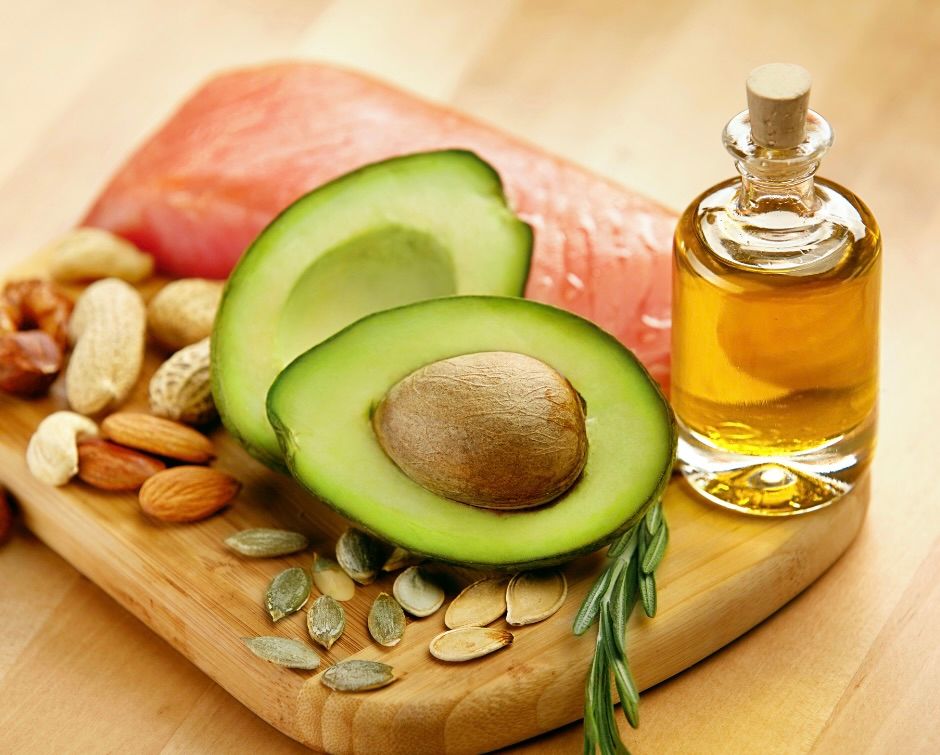
Common Sources of Healthy Fats:
- Oils: olive oil, canola oil, safflower oil, sunflower oil, corn oil, flaxseed oil, soybean oil
- Nuts and seeds: almonds, cashews, peanuts, pecans, walnuts, flaxseeds, chia seeds
- Nut butters: peanut butter, almond butter
- Avocados
- Fatty fish: salmon, mackerel, herring, sardines, albacore tuna, anchovies
Unhealthy Fats: Ones to Limit or Avoid
Unhealthy fats include saturated fats and trans fats. These can raise LDL cholesterol and increase the risk of heart disease.
MMRx tip: Try to limit saturated fats to less than 10% of your daily calories and avoid trans fats whenever possible.
Foods High in Saturated Fat (Limit These):
- Fatty cuts of beef, pork, and lamb
- Poultry skin or fat
- Full-fat dairy products (whole milk, butter, cheese, ice cream)
- Tropical oils (coconut oil, palm oil, palm kernel oil)
- Processed meats (bacon, sausage, hot dogs)
- Fried foods
- Baked goods and desserts made with butter or shortening
Foods with Trans Fats (Avoid These):
- Partially hydrogenated oils (read food labels for this ingredient)
- Some margarines and shortenings
- Many packaged snack foods, cookies, and crackers
- Some microwave popcorn
- Some frozen pizzas and coffee creamers
Simple Fat Swaps That Make a Big Difference
Improving your fat intake is easier than you think! These small swaps add up fast:
- Instead of butter for cooking → Use olive oil or canola oil
- Instead of red meat → Choose fish, especially fatty fish like salmon
- Instead of frying → Steam, bake, grill, or boil your food
- Instead of full-fat dairy → Choose low-fat or fat-free milk, yogurt, and cheese
- Instead of creamy salad dressing → Use olive oil and vinegar
- Instead of chips or cookies → Snack on a handful of nuts
- Instead of butter on toast → Use nut butter
- Instead of croutons on salad → Add nuts or seeds
The Bottom Line for Midlife Women
A typical healthy diet should contain about 20-35% total calories from fat, but the type of fat matters. Keep saturated fats to <10%, avoid trans fats and aim for two servings of fish per week.
Replacing unhealthy saturated and trans fats with healthy unsaturated fats—especially from fish, nuts, seeds, and vegetable oils—can reduce your risk of heart disease by up to 30%. The goal is not to cut out fat, but rather choose fats that support your heart, brain, and long-term health. For women in midlife, these simple changes can make a big impact on their healthspan and longevity.