
By Larissa Wright, MSN, APRN, FNP-BC
If you are in your 40s or 50s, you’ve probably heard about bone density scans (DEXA) - but many women assume they’re only necessary later in life. The truth is, the years around menopause are one of the most important times to start paying attention to your bone health.
Let’s break down why.
What Happens to Your Bones During Menopause?
Estrogen plays a major role in maintaining bone strength. As you enter perimenopause and menopause, estrogen levels begin to decline, and that has a direct impact on your bones.
This can lead to:
- Faster bone loss (especially those first few years post menopause)
- Decreased bone density
- Increased risk of fractures
Bone is living tissue that constantly remodels itself. Two main cell types drive this process: osteoblasts (which build new bone) and osteoclasts (which break down old bone). Before perimenopause and menopause, these processes are balanced, keeping bone mass stable.
When estrogen declines in the menopause transition, osteoclast activity increases dramatically and outpaces osteoblast bone formation, leading to accelerated bone loss. Many women lose up to 20% of their bone mass during the menopause transition without even realizing it.
Bone loss is silent. You won’t feel it happening.
What is a Bone Density Scan?
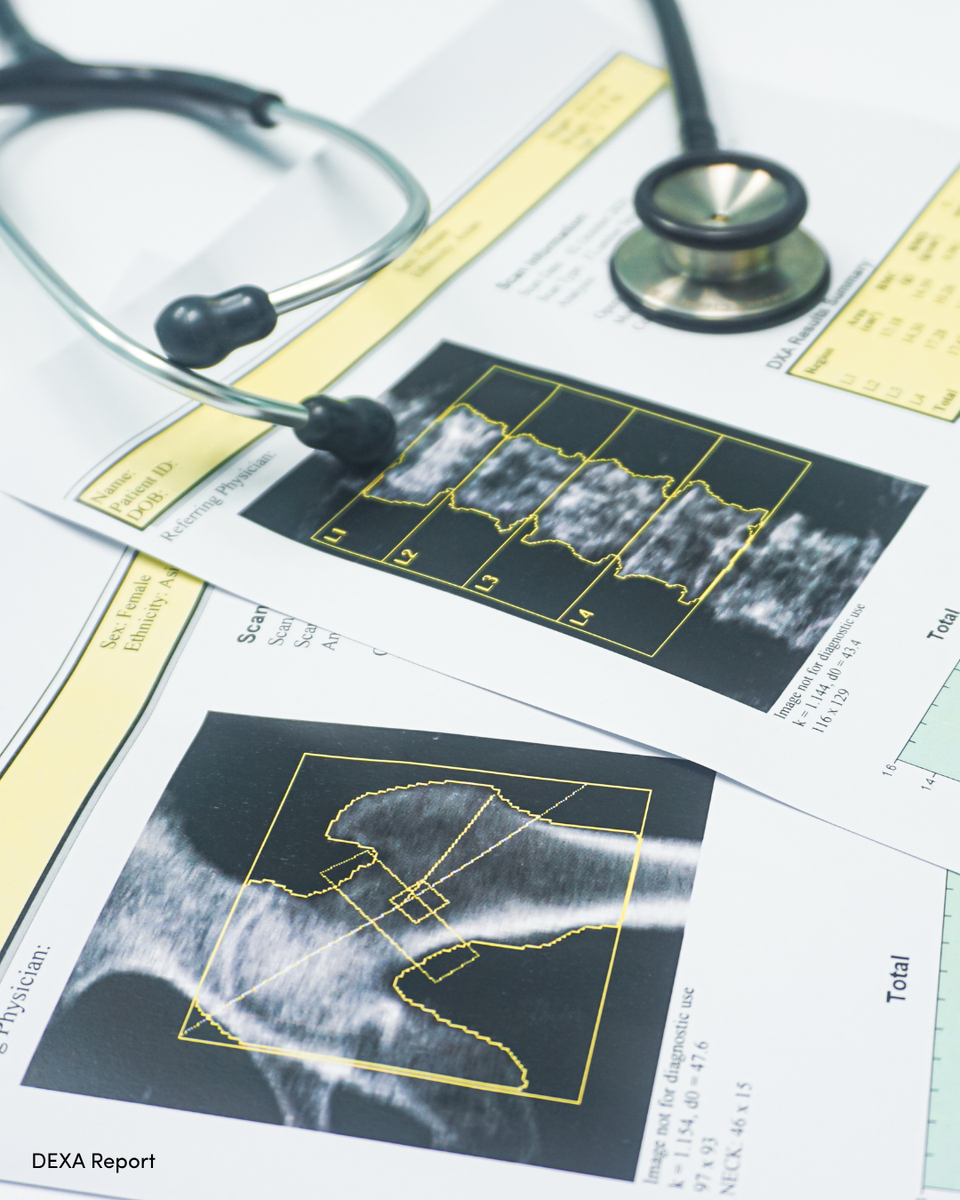
A bone density scan (also known as a DEXA scan) is a quick, painless radiologic test that measures how strong your bones are.
- Takes about 15 minutes
- Uses very low radiation
- Typically scans your hip, femur, and spine
- Gives you a score (called a T-score) that tells us if your bones are normal, low density (osteopenia), or in the osteoporosis range.
Why Women in Midlife Should Consider Screening
The US Preventive Services Task Force and most insurance guidelines recommend routine screening starting at age 65 if you don't have additional risk factors, but that doesn’t mean you should wait. Many women benefit from earlier screening - especially since bone changes are silent.
The official guidelines say a bone density scan is recommended in menopause if you:
- Are in early menopause (before age 45)
- Have a family history of osteoporosis or fractures
- Have had a fracture as an adult
- Are low body weight, less than 127 lbs.
- Smoke or drink alcohol regularly
- Use medications that affect your bones, such as steroids or estrogen blockers
- Have medical conditions, such as thyroid disorders or autoimmune disorders
MMRX tip:
If your insurance company will not cover the cost of a bone density test (DEXA), look for an independent free-standing radiologic center and ask for the cash pay price. They are usually much more cost-effective than your local hospital system.
Why Early Detection Matters
Even without these risk factors, many menopause specialists are taking a more proactive approach- because catching bone loss early changes everything. By the time osteoporosis is diagnosed, or after a fracture, significant bone loss has already occurred.
A DEXA scan allows us to:
- Detect bone loss (osteopenia) before it becomes too severe (osteoporosis)
- Track changes over time
- Decide if lifestyle changes are enough, or if treatment is needed
- Reduce your risk of fractures later in life, improving your healthspan and longevity
- Personalize your menopause hormone therapy to better protect your bones.
This is especially important because fractures (like hip fractures) can significantly impact independence and quality of life. Studies have shown that 50% of the women who break a hip become dependent on others for daily activities. And yet, osteoporosis is preventable!
What Can You Do to Protect Your Bones?
Here’s the good news- you have more control than you think!
- Add and be consistent with strength training: Weight-bearing and resistance exercises at least 2x per week help maintain and build bone.
- Limit Bone Drainers: Smoking, excess alcohol, and prolonged inactivity all accelerate bone loss
- Prioritize Protein: Adequate protein intake supports bone structure and muscle strength
- Consider Hormone Therapy: Menopausal hormone therapy (MHT) can help preserve bone density, especially when started in your late perimenopause stage. In gold standard clinical trials, estrogen therapy reduced fracture risk by 24-34% and increased bone mineral density in postmenopausal women.
- Calcium - always prioritize dietary sources! Calcium- roughly 1200 mg per day (from food and supplements, if needed) under age 50. 1500 mg per day over age 50.
- Vitamin D - around 2000IU of vitamin D3 is recommended per day for supplementation. Everyone is different, so checking a level can help optimize your dose. You can self-order a Vitamin D lab test without a doctor's visit directly from your MyMenopauseRx dashboard.
Protect Your Future Strength, Protect Your Independence
Bone health isn’t something to think about “later.” Perimenopause and menopause are a critical window where small changes and early screening can make a big difference in your long-term health. A bone density scan is simple, quick, and gives you valuable insight into your future risk.
If you’re a woman in midlife, it’s worth the conversation with a MyMenopauseRx menopause expert. We can order a bone density test, Vitamin D, and personalize a bone health plan so you age well. You deserve to live your best life!